Navigate the menu below to learn more about some of the generous donations offered to the Harp Studio!

Patrick Stanfill Harp Scholarship Endowment

The University of North Texas College of Music is very pleased to announce the Patrick Stanfill Harp Scholarship Endowment, which enables harpists to study at the University of North Texas College of Music! If you are interested in contributing to this fund or any other programs at the UNT College of Music, please contact the Development Office.

Thanks for supporting harp studies at UNT!

Rosalind Simpson Collection

The University of North Texas library is fortunate to have recently received a generous donation of over 700 solo, chamber and orchestral harp parts from Rosalind Simpson. This extensive collection will soon be available in the UNT Library.  Rosalind was a featured Southwestern harpist during the 9th AHS Summer Institute, held on the UNT campus in 2011. 

Rosalind Simpson has toured throughout the Southwest in recital and education.  She has worked with all major musical organizations in the area, including The Santa Fe Opera Orchestra, Santa Fe Desert Chorale and Women's Ensemble, Santa Fe Chamber Music Festival, the Santa Fe Pro Musica, Albuquerque's “Chatter”, Taos Chamber Music Group, and the Las Cruces, New Mexico, El Paso, Oklahoma City Philharmonic, Amarillo, Fargo ND and San Juan symphony orchestras.

Recent festivals include Music in the Mountains Durango, Santa Fe Chamber Music Festival, Telluride, Animas, the 2008 World Harp Congress in Amsterdam, Holland and the 2010 American Harp Society National Conference in Tacoma.  Before moving to Santa Fe, Rosalind was principal harpist of the Bern (Switzerland) Symphony Orchestra.  She was awarded the Premier Prix (Harp and Chamber Music) and the Diplôme Supérieur (Harp) from the Brussels Conservatoire.

Ruth Negri Collection

The University of North Texas library is fortunate to have received a generous donation of over 200 orchestral and opera harp parts from Ruth Negri Armato, retired harpist of the New York Philharmonic.  Please explore this collection online.
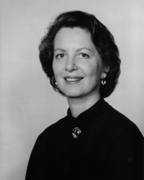
Portrait of Rugh NegriRuth Negri was born in San Diego and began piano lessons at age four and a half.  At age eleven when she was introduced to the harp… “the most beautiful sound I ever heard” influenced her study of the harp.  In addition to harp lessons, she studied double bass because of the scarcity of orchestral harp parts.  At age sixteen, Ms. Negri was harp soloist with the Los Angeles NBC Orchestra as a finalist in the Hollywood Bowl Auditions of the Air.

Ruth was a scholarship pupil of Marcel Grandjany at the Juilliard School of Music and graduated with highest honors as a winner of the prestigious Damrosch Scholarship.  While still a student at Juilliard she performed with the New York City Opera, RCA and CBS Orchestras with Fritz Reiner, Leopold Stowkowski, Wilfred Pelletier, Pierre Monteux, Donald Voorhees, and Andre Kostelanetz before beginning a nine year engagement as principal harp of the New York City Ballet Co. in 1950.

Ms. Negri joined the New York Philharmonic in 1969, and retired in June 1997.  She has been a soloist with the New York Philharmonic Ensembles and remains active as a soloist and chamber music performer.  In 1970-71 and 1986-87 she took sabbaticals from the New York Philharmonic when she was invited to play principal harp with the Metropolitan Opera Orchestra.  In 1987 she was soloist in a TV special of Donizetti's “Lucia” with the Metropolitan Opera.

From 1950-to the present Ms. Negri has been active as a teacher, coach, and performer (Williamsburg Settlement House, Manhattan School of Music, and privately).  She has also been an adjudicator (American Harp Society, NY Philharmonic, Manhattan School of Music, Juilliard and Concert Artists Guild).  She has played for many commercials, soap operas (General Hospital, 15 years), numerous TV specials and over 30 films (including Miracle Worker, Indian in the Cupboard)

Ruth lives in Hartsdale, New York with her husband Ben Armato, retired Clarinetist of the Metropolitan Opera Orchestra.   They have three daughters, six grandchildren and two great grandchildren.

One of her greatest joys has been working with composers, sharing with them the “do's and don'ts” of writing for harp… notably Ellen Taffe Zwilich, Dave Brubeck, Ray Sebesky and Derek Bermel.  Ellen Zwilich dedicated her “4 Nocturnes for Harp” to Ruth and gave the first performance of them at Juilliard in 1974.

Williams Historic Harp Collection
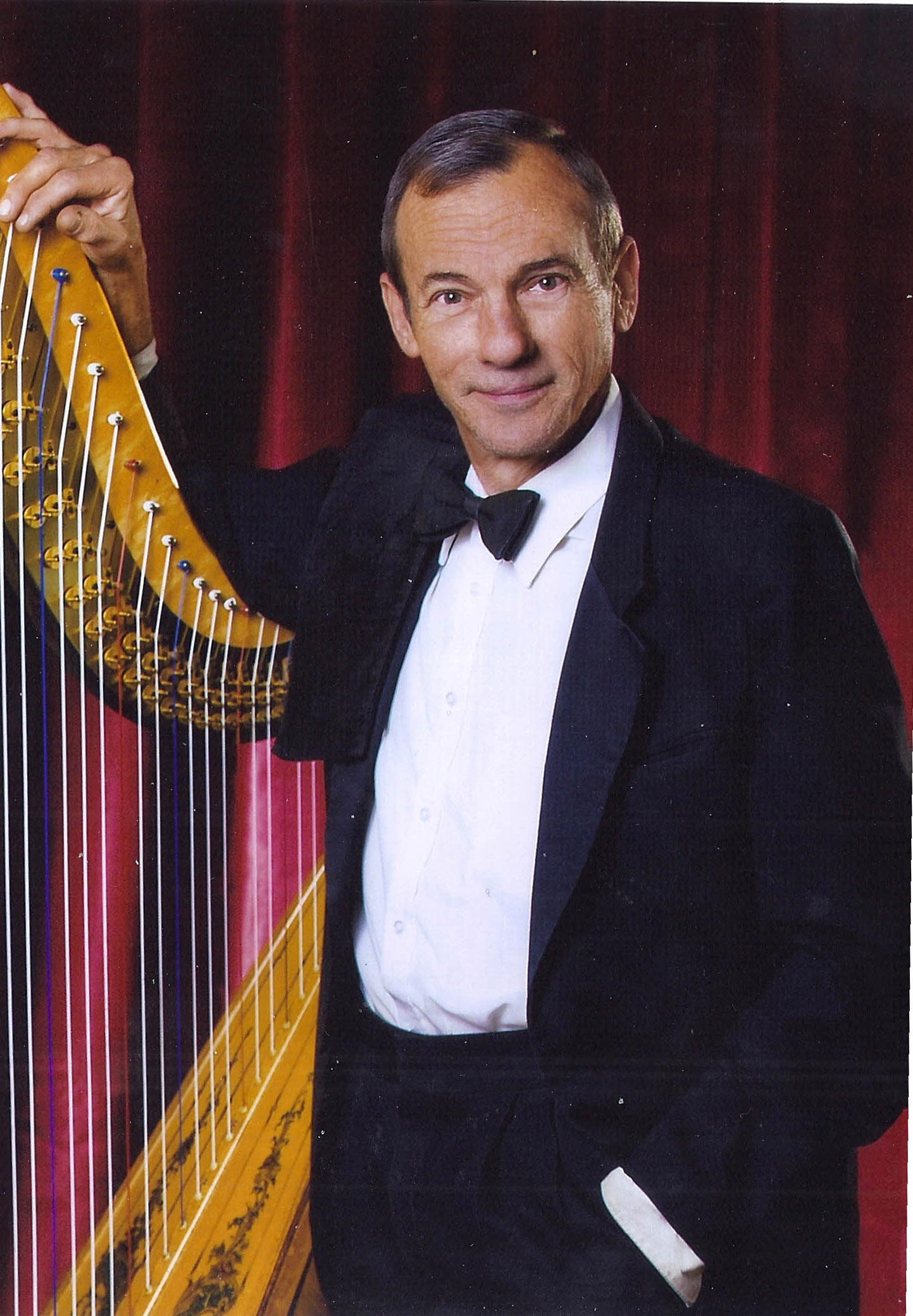
Portrait of David Williams, Harpist
 

The University of North Texas (UNT) harp studio, under the direction of Dr. Jaymee Haefner, has recently received a donation four historic harps from the 18th and 19th centuries.  David Williams, UNT alumnus (MM, 1976) donated the harps to the University of North Texas in May of 2014.  David recently retired from his position of principal harpist with the Dallas Opera and the Fort Worth Symphony Orchestra, positions which he held since 1989.  Previously, he also served as second harpist for the Dallas Symphony Orchestra. David received his BM (1971) from SMU, studying with Julia Hermann. He received his MM (1976) from UNT, studying with Charles Kleinsteuber. David also studied privately with Dorothy Lymann.

David Williams, harp builder and technician, acquired and restored the historic harps himself, which included wood work, gilding, painting, and rebuilding of the action.  The four harps span much of the pedal harp's development and history.  The oldest harp, a single-action crochet harp, was made by Jean Henry Naderman (1735-1799) in Paris, and dates from c. 1770.  The second-oldest harp is also a crochet harp made by Naderman, and dates from c.1780.  This harp has a hand-painted soundboard with chinoiserie motifs and is gilded with 24K gold.  These ornate single-action harps represent the style of harp which would have been familiar to W.A. Mozart and Marie Antoinette.  The third harp dates from 1816, and is a Ram's Head single-action made by Sebastian Érard (1752-1831) in Paris.  This harp features an early fork mechanism.  The fourth and youngest harp dates from 1836 and was made by Sebastian Érard's nephew, Pierre-Orphee Érard (1794-1855) in London.  This harp has double-action and includes an eighth pedal to control the shutter-mechanism to open and close the sound holes on the back of the harp.  Pierre-Orphee Érard also developed the popular Gothic model, which would have been played by several respected harpists, including Parish Alvars and Henriette Renié.

Although these donated harps are unplayable due to their age and brittle soundboards, the hook and fork mechanism are partially-operational, which makes these harps an ideal teaching tool for university students.  This is the goal that David Williams stated when donating the harps to the University of North Texas.  He says, “I'm just glad that my guys found a good home.”   …And they have indeed found a good resting place, as the donation has spurred several articles to be published in the Dallas-Fort Worth Metroplex, and several interviews about his generous gift.  Harpists are fortunate to have a tangible piece of harp history, which visibly displays the rapid development of the instrument during the past 200 years.

Visitors may contact Dr. Jaymee Haefner at jaymee.haefner@unt.edu or 940-565-3739 to make an appointment to see the harps, which reside in the UNT harp studio at the College of Music.

Click here for a video about the harps, donated by David Williams to the UNT College of Music.